Kira Nam Greene, whose work explores female sexuality, desire and control through figure and food still-life paintings, was a finalist for the inaugural Bennett Prize— a biennial award for women painters working in figurative realism.
The Prize, now in its fifth cycle, was founded in 2018 by collectors Steven Alan Bennett and Dr. Elaine Melotti Schmidt with a straightforward mission: to help women painters achieve the kind of recognition that has historically gone to their male peers.
“By acknowledging the importance of women artists, The Bennett Prize is providing an antidote to what might be going on in the art market and the art world in general,” Nam Greene says. “I encourage emerging women painters to apply for the Bennett Prize. You meet 10 other amazing women artists… the diversity of the different practices will enrich your own art practice, but also your understanding of what realism is.”
The call for entries is now open through September 19. Ten finalists will be invited to join a distinguished group of women artists and participate in Rising Voices, a traveling group exhibition opening at the Muskegon Museum of Art in 2027. From these finalists, one winning artist will receive $75,000 to create a solo exhibition, and the first runner-up will receive $10,000. Please visit thebennettprize.com for full details.
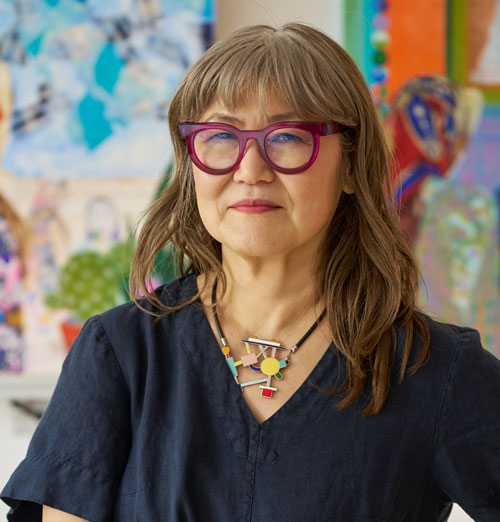 Kira Nam Greene’s work explores female sexuality, desire and control through figure and food still-life paintings, surrounded by complex patterns. Imbuing the feminist legacies of Pattern and Decoration Movement with transnational, multicultural motifs, Greene creates colorful paintings that are unique combinations of realism and abstraction, employing diverse media such as oil, acrylic, gouache, watercolor and colored pencil. Combining Pop Art tropes and transnationalism, she also examines the politics of food through the depiction of brand name food products, or junk food. Recently, Greene started a figurative painting series spurred by the 2016 Presidential Election, Women’s March, #metoo movement and ensuing crisis of conscience, this new body of work aspires to present the power of collective action by women.